Torrecilla Eslovena (FA) – Tres Picos, Lago Puelo (Argentina)
After reaching Cerro Anexo and Cerro Boris last December, my uncle and I decided to go back to the Tres Picos zone, with a better plan, better idea & more solid approach to the range.
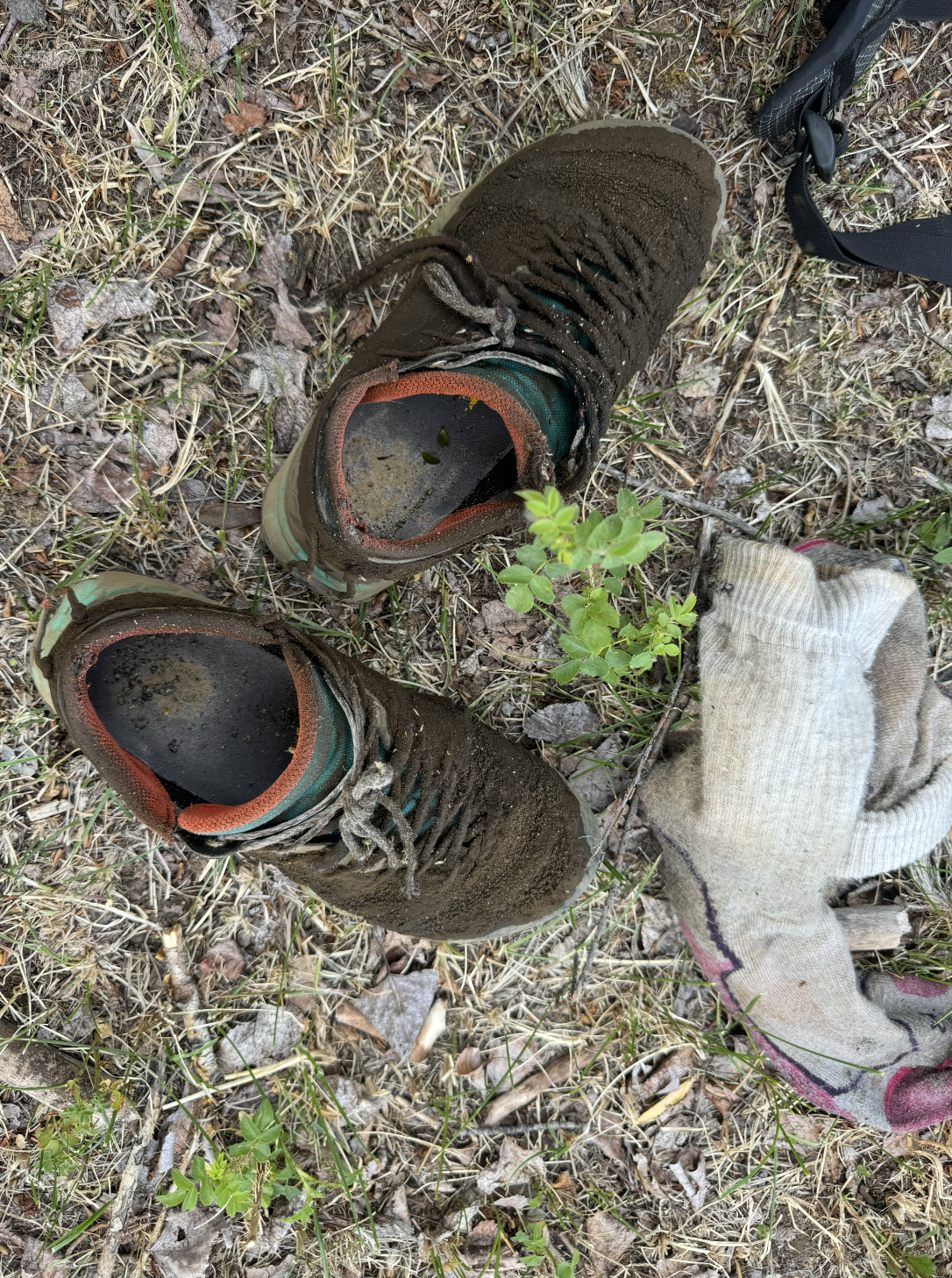
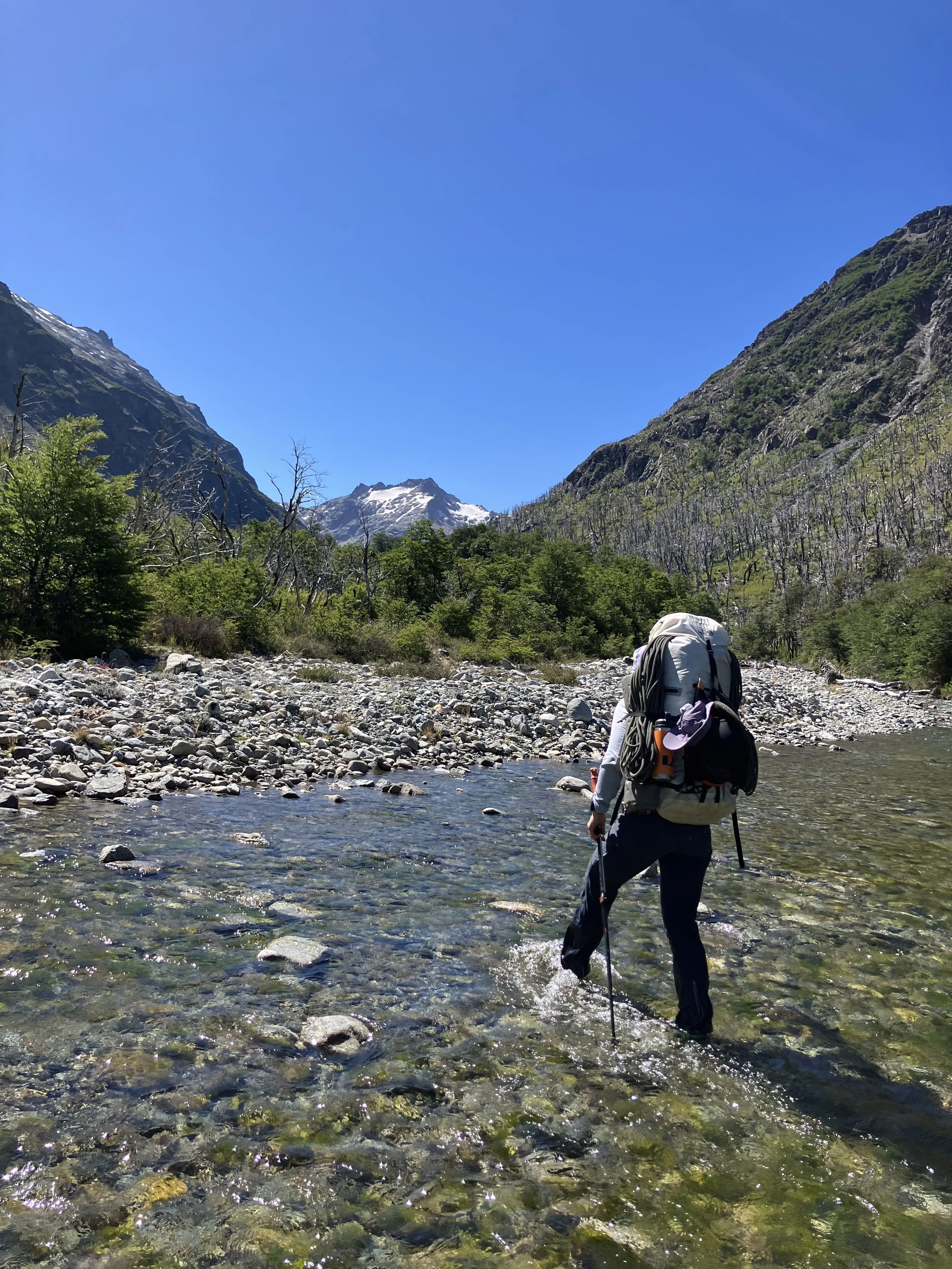
18 kilómetros in, we reached the base camp under the mountain after 10 hours of river walking and bamboo fighting, a true Patagonian approach, via Rio Turco from Cholila.
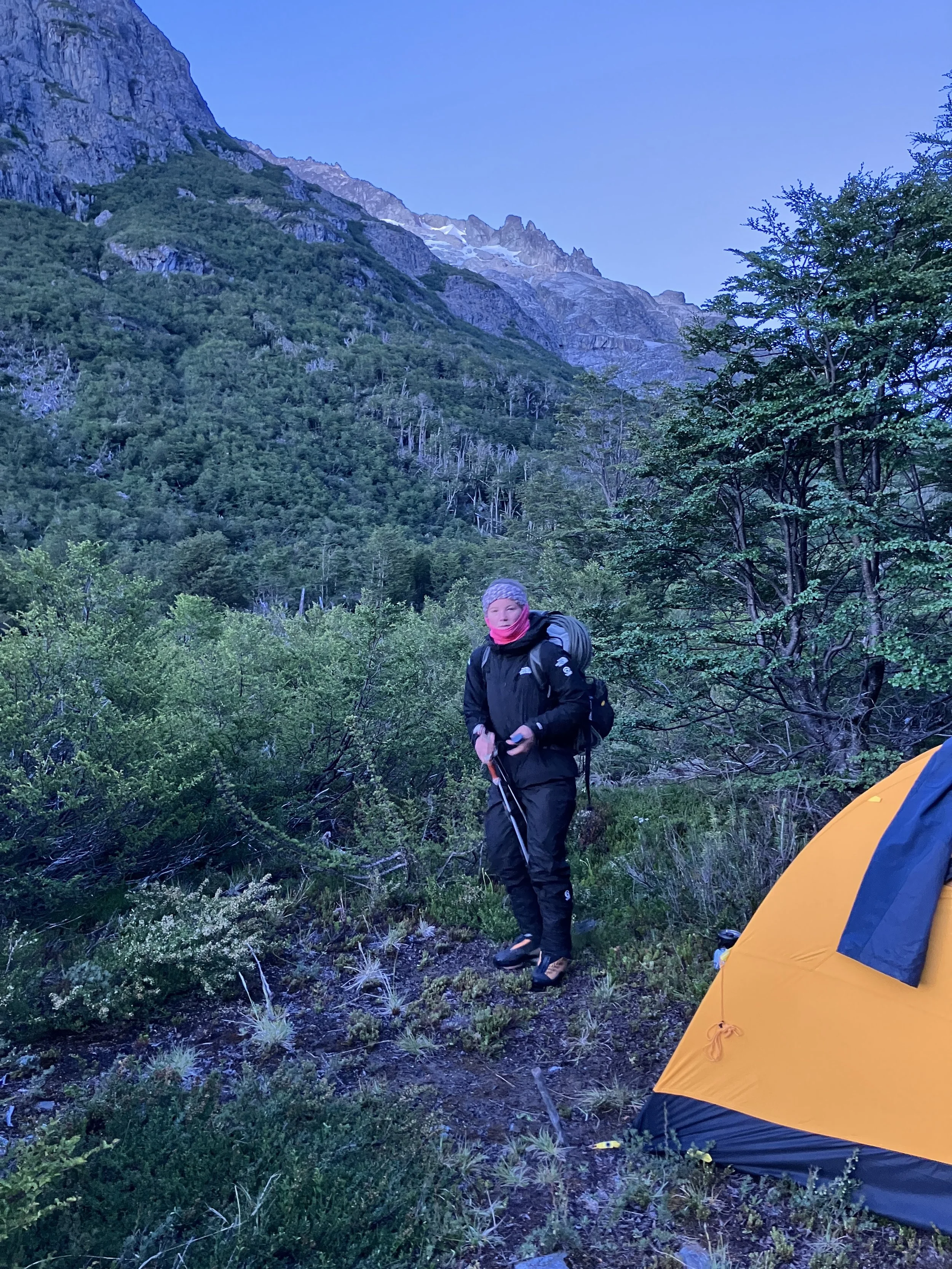
The next day, we woke up at 4 and left the tent around 5 as soon as it got light enough to see.
The first challenge right off the bat was crossing a big mallin and finding our way up this big chute.
Up the rocks, we were ascending quickly, just as the sun was coming up — we soon reached the lagoon at 1500 meters. With a beautiful view of Torre Tuma, and its glaciers we could see our path clearly.
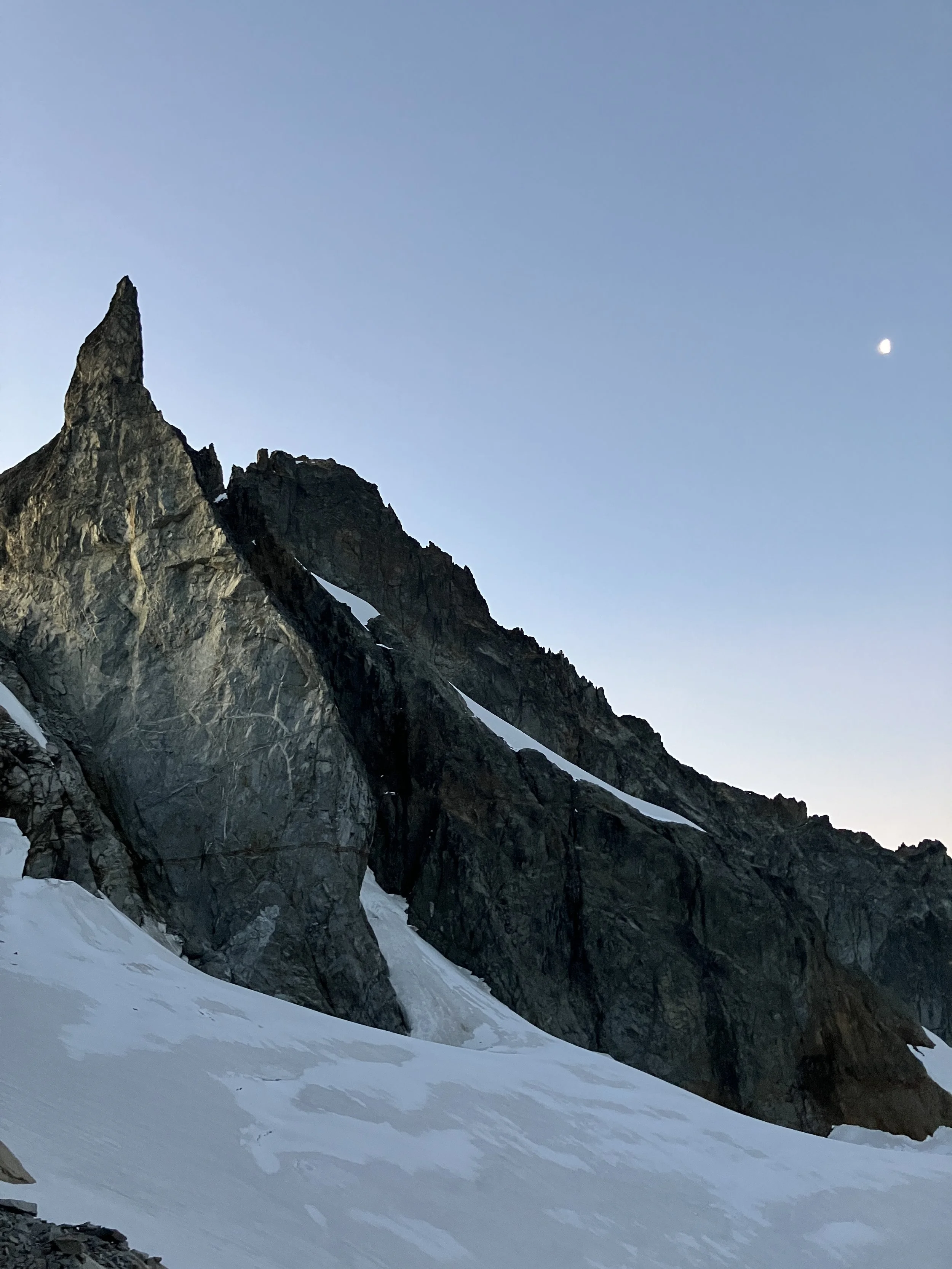
Even though our main objective was the summit of Torre Tuma, we decided to go around and climb a different tower on its south side. The decision mostly came from the sheer size of the main wall, our lack of time and the loose rock that kept coming down the wall was pretty discouraging.
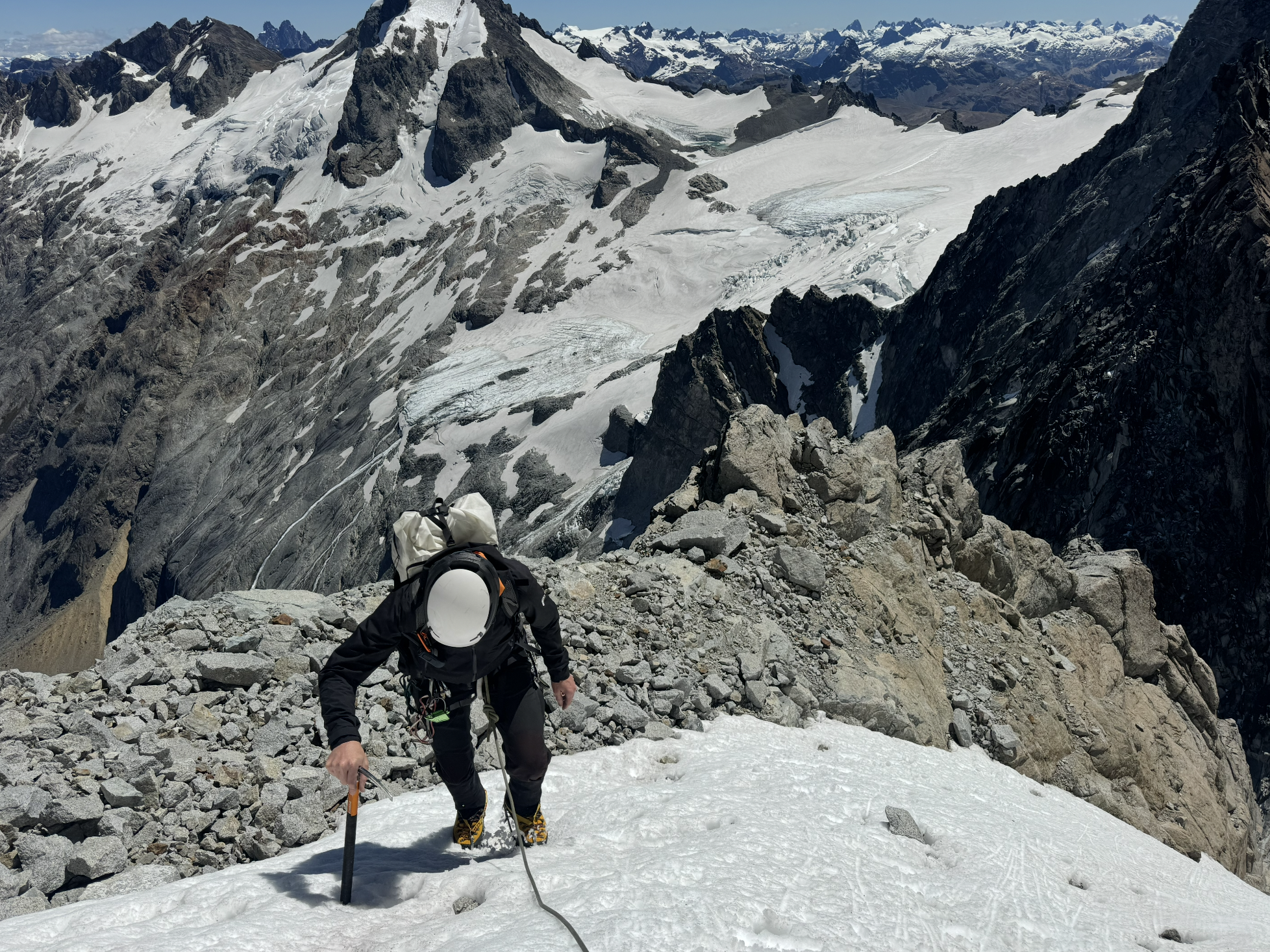
Climbing was straightforward on the first part, ascending the west-facing couloir and reaching the first col. After that, we wrapped around, on steeper but still low-angle terrain until we stood below the southwestern wall. That’s when the ‘real climbing’ began. We found a way up. There were lots of options, but the biggest challenge was all the loose rock formations and basically nothing felt solid. A few pitches later, around 120 meters, around 6pm, we reached the summit of the new tower, adding another Slovenian ascent to the Tres Picos collection.
Camp to camp took around 21 hours, and on 3rd day we hiked out. Completing 45 kms / 52 hours of movement in 3 days.
This year marks 75 years of the first ascent of Tres Picos , done by Slovenians.
Torre Tuma has a handful of ascents in the last 75 years. I completely understand why. Loose rock, the sheer size and distance probably discourage everyone who doesn’t want to suffer a little bit. The only two reports we found did not emphasize the difficulty of this mountain range. Huge respect!!







75 Years of the Slovenian Mountaineering Society of Bariloche
“This year, the Slovenian Mountaineering Society of Bariloche (Argentina) celebrates its 75th anniversary. The society, of which I am a proud member, has for decades represented an important center of Slovenian mountaineering, alpine, and cultural life within our Slovenian community, as well as within my own family.
On this occasion, I would also like to share a recent mountaineering achievement that symbolically connects to the history of Slovenian alpinism in Patagonia and to the legacy of our society.
Together with my niece, Alenka Mali, after two years of exploring the remote Tres Picos mountain range (“Three Peaks” or “The Spires”), located approximately 200 kilometers south of Bariloche, we completed a first ascent at the end of December on one of the towers in the area. We named the new route and tower Torrecilla Eslovena, or “Slovenian Little Tower.” It will also appear under this name on official maps.
The Slovenian Little Tower stands beside a higher tower that was first climbed in 1952 — only one year after the founding of the Slovenian Mountaineering Society of Bariloche — by Slovenians Bertoncelj and Jerman. At the time, the mountain was considered unclimbable. That climbing team named the tower Torre Tuma (Tuma Tower, 2,550 meters), in honor of Henrik Tuma, the Slovenian mountaineer, politician, writer, and great admirer of the Slovenian nation.
In the decades that followed, only four rope teams successfully climbed this wall. Our ascent was the fifth, and with it, Alenka became the first woman to climb in this wall.
We completed the ascent in a total time of 49 hours, door to door, over the course of three days. Our backpacks weighed approximately 25 kilograms. Although conditions today are somewhat more favorable compared to the past — mainly due to lighter equipment and the availability of satellite imagery that helps with route finding — such an expedition remains a demanding and serious undertaking.
We see our ascent as a humble tribute to the generations of Slovenian alpinists who settled in Bariloche after the war and who, decades ago, opened new routes in Patagonia with exceptional courage and vision, while also serving as a symbolic continuation of the story of the Slovenian Mountaineering Society of Bariloche.”
Matias Kambič, January 2026